


How to Choose a Destination Wedding Planner in Italy
What Couples Should Ask Before Hiring

Planning a destination wedding in Italy is very different from planning a wedding close to home. The beauty of the setting may make everything look effortless, but behind a successful celebration there are often months of coordination involving venues, caterers, transportation companies, musicians, florists, rental companies, hotels, local authorities and dozens of other details.
For couples planning from the United States, there is another layer of complexity: language, distance, different business practices, unfamiliar contracts and payment procedures, and the simple fact that you cannot easily visit a venue or meet a vendor whenever a question arises.
Choosing the right wedding planner therefore becomes one of the most important decisions you will make.
But how do you know who is right for you?
Beautiful photographs and a polished Instagram account can tell you something about a planner’s aesthetic. They tell you much less about what it will actually be like to entrust that person with one of the most complicated and expensive celebrations you may ever organize.
Here are the questions I believe couples should ask before hiring a destination wedding planner in Italy.

1. How Well Do You Actually Know the Destination?
There is a significant difference between having planned a wedding somewhere and truly knowing a region.
Italy is not one wedding destination. Tuscany, the Amalfi Coast, Puglia, Sicily and the Italian lakes have very different venues, logistics, weather considerations, transportation challenges and local ways of doing business.
Ask a prospective planner how much time they have spent in the area you are considering. Which venues have they personally visited? Which properties work particularly well for your guest count? What are their limitations? What happens if it rains? How difficult will transportation be for your guests?
A planner who knows a destination well should be able to discuss not only its most beautiful venues, but also their practical realities.

2. Do You Regularly Work with International Couples?
Planning an Italian wedding while living in Boston, New York, Miami or Los Angeles requires a different process than planning locally.
Time differences matter. Currency and international payments matter. Contracts written according to Italian business practices may be unfamiliar. Your guests may need assistance with accommodations and transportation. You may be trying to make important decisions without seeing things in person.
A planner accustomed to working with American and international couples becomes the bridge between two systems. They should be able to explain what is normal in Italy, identify what requires negotiation, and translate local practices into a planning process that makes sense to you.
3. Can Your Planner Communicate Directly with Italian Vendors?
Language is not merely a convenience.
Some of Italy’s most talented wedding professionals work internationally and speak excellent English. Others do not, particularly smaller local suppliers and artisans. And even when everyone speaks English, negotiations and complicated logistical conversations can be considerably easier in Italian.
Your planner should be able to communicate clearly with the people actually producing your wedding, without important details getting lost between multiple intermediaries.
4. What Experience Do You Have with Weddings of Our Size and Complexity?
A beautiful dinner for 40 guests and a three-day celebration for 150 guests are both destination weddings, but operationally they are very different events.
As guest counts increase, so does the complexity of transportation, accommodations, catering, rentals, staffing, production, seating, guest communication and contingency planning.
The same applies to multi-day weddings. A welcome dinner, wedding day and farewell brunch are not simply three reservations. Together they should feel like one thoughtfully planned experience.
Ask about weddings comparable to yours not only aesthetically, but also in guest count, number of events and logistical complexity.

5. Who Will Actually Plan Our Wedding?
This question is particularly important when interviewing larger or highly visible planning companies.
The person whose name is on the website or whose work you discovered on Instagram may not necessarily be the person managing your wedding.
Ask who will be your primary contact throughout the process. Who attends meetings? Who communicates with vendors? Who will be onsite in Italy? At what point, if any, is your wedding transferred to another planner or coordinator?
There is nothing inherently wrong with a team structure. Excellent companies operate this way. What matters is knowing who you are actually hiring and how involved that person will remain.

6. How Many Weddings Do You Take Each Year?
More is not necessarily better.
Destination weddings require enormous amounts of preparation, particularly during the months immediately preceding the celebration. A planner’s availability and workload can directly affect the level of attention you receive.
Instead of being impressed simply by a very large portfolio, ask how the company structures its calendar and ensures that each wedding receives sufficient attention.
7. How Do You Approach Budgets?
A good planner should be comfortable discussing money.
That does not mean predicting every expense perfectly at the beginning of the process. Prices change, guest counts evolve and couples’ priorities shift.
It does mean helping you understand where your budget is likely to go, identifying expenses you may not have anticipated and telling you when an idea is likely to cost considerably more than expected.
The goal should not simply be to spend less. Particularly with luxury weddings, the more important question is where does spending actually improve the experience?
Sometimes the most expensive option adds very little. Sometimes spending more in the right place transforms the entire event.
Your planner should know the difference.

8. How Are Vendor Recommendations Made?
Your planner will introduce you to photographers, florists, musicians, caterers, production companies and many other professionals.
Ask how those recommendations are selected.
Do they present several appropriate options? Are recommendations based on your style, priorities and budget? Does the planner receive commissions or referral fees from certain vendors, and if so, how are those arrangements handled?
Receiving a commission does not automatically create a conflict of interest. Lack of transparency does.
You should feel confident that a vendor is being recommended because they are right for your wedding.

9. What Happens When Something Goes Wrong?
This may be one of the most revealing questions you can ask.
Do not ask whether things ever go wrong. They do.
Weather changes. Flights are delayed. Deliveries arrive late. Equipment fails. Guests miss transportation. A vendor can become ill. A carefully planned outdoor dinner may suddenly need to move indoors.
Experience is often most valuable in the moments guests never know happened.
Ask a planner to describe a difficult situation they have handled. You are not looking for a perfect history. You are looking for judgment, composure, resourcefulness and the ability to make decisions under pressure.

10. Do You Understand the Traditions That Matter to Us?
For multicultural, interfaith and religious weddings, this becomes particularly important.
A Jewish wedding, Indian wedding, Catholic ceremony or celebration bringing several cultural traditions together may require very specific timing, vendors, ceremony elements, food considerations and family expectations.
Your planner does not need to share your background. They do need to understand and respect what matters to you, ask the right questions and know when additional expertise is necessary.
Tradition should never feel like something inserted into a generic wedding template.
Indian groom arriving on horseback for his baraat at Borgo Stomennano in Tuscany Jewish wedding ceremony beneath a floral chuppah at Isola del Garda on Lake Garda Catholic wedding in Ouglia Italy, couple exiting the church Symbolic garden wedding at Castello di Celsa Tuscany
11. How Do You Plan the Guest Experience?
Your guests are traveling a long way to celebrate with you.
Their experience begins well before they sit down for dinner.
How easily can they reach the destination? Where will they stay? Will transportation be intuitive? Is there too much unstructured time? Are you asking them to travel repeatedly between distant locations? Will older guests be comfortable navigating stairs, cobblestones or summer heat?
Luxury is not only beautiful flowers, extraordinary food and a spectacular venue.
It is also making things feel easy.

12. Trust Your Instincts, Check References, and Understand the Planning Process
There is only so much you can learn about a wedding planner during one or two introductory conversations.
Pay attention to your first impression. Did you feel comfortable talking to this person? Did they listen carefully? Did the conversation feel natural rather than rehearsed? Did you feel that they were genuinely interested in understanding your priorities rather than simply selling you their services?
Your instinct matters, but it should be supported by some independent research.
Read online reviews, and don’t hesitate to ask for references. Speaking directly with previous clients can tell you things that are almost impossible to know during an initial consultation. How responsive was the planner once the contract was signed? Was communication consistent throughout the planning process? How involved were they personally? Were financial matters handled transparently? How did they respond when something unexpected happened? And, ultimately, would the couple choose to work with them again?
Whenever possible, ask to speak with clients whose weddings were similar to yours in size, destination or complexity.

There is one more important question that couples sometimes overlook: How does the planning process actually work?
An experienced planner should have a clear approach to managing a wedding over many months. Ask how you will communicate, how often you should expect to hear from each other, how decisions and deadlines are tracked, how budgets and payments are managed, and how information is shared with you as the wedding evolves.
There is no single planning system that is right for everyone. Some planners use dedicated planning platforms, others combine shared documents, email, scheduled meetings and other tools. What matters is that there is a well-established process and that you understand it before you sign the contract.
For a destination wedding, particularly a complex multi-day celebration, good communication is not an extra service. It is one of the foundations of successful planning.
A useful question to ask is: “Can you walk me through what the planning process with you looks like after we sign the contract?”
A Beautiful Wedding Should Feel Effortless. Planning One Is Not.
The photographs you see after a destination wedding show the finished story: the villa, the flowers, the candlelight, the dinner under the stars.
They rarely show the hundreds of decisions that made those moments possible.
That is precisely the point.
The best planning is often invisible. Guests experience beauty, hospitality and ease while an enormous amount of work happens quietly behind the scenes.
When choosing a destination wedding planner in Italy, look beyond the beautiful portfolio. Look for relevant experience, local knowledge, transparency and a planning structure that gives you confidence. Speak with previous clients, ask specific questions, and pay attention to how you feel during those first conversations.
Ultimately, you are not simply hiring someone to create a beautiful wedding. You are choosing the person you will trust to make it happen thousands of miles from home.
Frequently Asked Questions
When should I hire a destination wedding planner in Italy?
Ideally, hire your planner before selecting and contracting the venue. An experienced planner can help evaluate not only a venue's beauty, but its logistics, capacity, restrictions, Plan B options, accessibility, and the true costs involved in holding a wedding there.
Should I hire a wedding planner based in Italy or in my home country?
Location alone should not determine your choice. More important is whether the planner has extensive experience working in Italy, knows the destinations and venues firsthand, communicates effectively with Italian vendors, and understands the expectations of international couples. For couples planning from the United States, a planner who is comfortable operating in both worlds can be particularly valuable.
Do I need a planner before I start looking at wedding venues in Italy?
I would recommend it, especially for a destination wedding. A venue that looks perfect online may have limitations that aren't immediately apparent, including transportation challenges, noise restrictions, insufficient indoor space, complicated rental requirements, or costs that only become clear once the full event is considered. Having your planner involved in the venue search can prevent expensive mistakes.
How important is it for a wedding planner to have worked at my exact venue before?
It can be an advantage, but I would not make it a requirement. More important is the planner's experience with the destination and with weddings of comparable size and complexity. A strong planner should know what questions to ask, recognize potential logistical issues, and be able to evaluate a new venue professionally.
Choosing the right planner begins with a conversation.
If you are considering a destination wedding in Italy, I would be delighted to learn more about your plans, priorities, and the experience you want to create for your guests. Our first conversation is an opportunity to see whether the approach, experience, and relationship feel right for both of us.
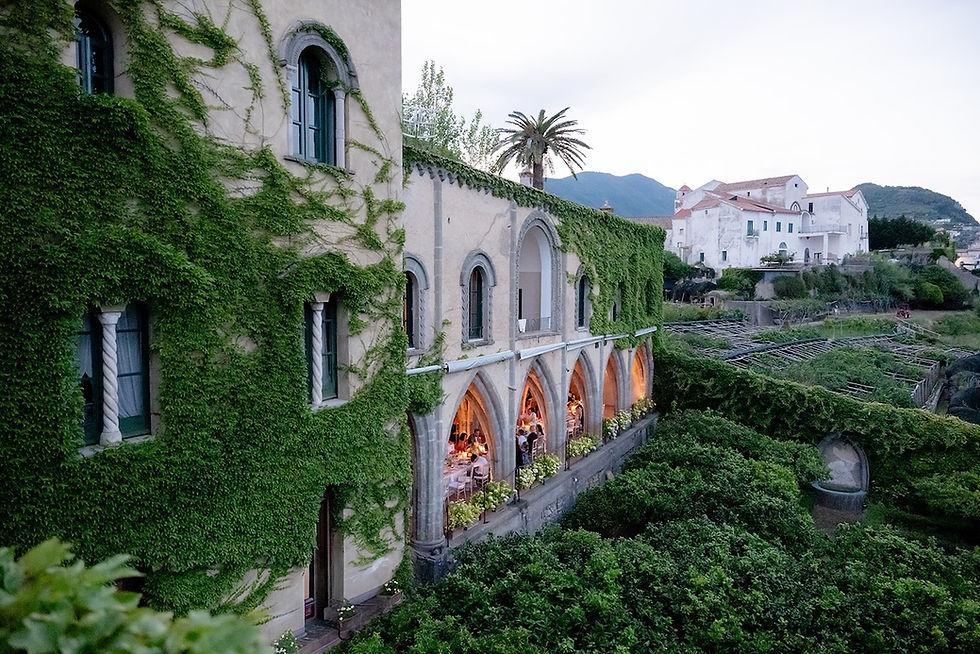
Photography featured in this article was photographed at celebrations planned by Primavera Dreams Weddings across Italy.
Photography Credits
Isola Del Garda, Lake Garda: Facibeni Wedding Photography
Villa Cimbrone, Ravello: Michael Zennaro Photography
Borgo Stomennano, Tuscany: Sarah Olivia Photography
Relais Histo Santo Pietro, Puglia: Michael Zennaro Photography
Castello Di Celsa, Tuscany: David Bastianoni Studio
Castello Aragonese, Ischia: Michael Zennaro Photography


