


Planning a Jewish Wedding at the Gardens at Elm Bank

The Gardens at Elm Bank is one of the Massachusetts venues I know especially well. An avid gardener myself, I am drawn to this gem, always full of seasonal blooms and intimate corners, a generous inside and outside spaces and a rich history. I have planned a number of weddings there over the years, each with its own design, traditions and personality.
For Jewish weddings in particular, Elm Bank offers something very valuable: enough distinct spaces to accommodate the many layers of the celebration while still allowing the day to feel connected and effortless.
A Jewish wedding may begin well before guests take their seats for the ceremony. There can be a tish, bedeken and ketubah signing, followed by the chuppah ceremony and, later, the wonderful energy of the hora. Each of these traditions has its own practical and emotional requirements.
Looking back at several Jewish weddings I have planned at Elm Bank also illustrates how differently these traditions can be interpreted. The same gardens, ceremony spaces and Carriage House have provided the setting for celebrations that felt romantic and formal, intimate and emotional, multicultural, exuberant, and entirely personal.
That is one of the things I value most about Elm Bank. Familiarity with a venue doesn't mean repeating what worked at the last wedding. It means understanding the property well enough to use it differently for each couple.
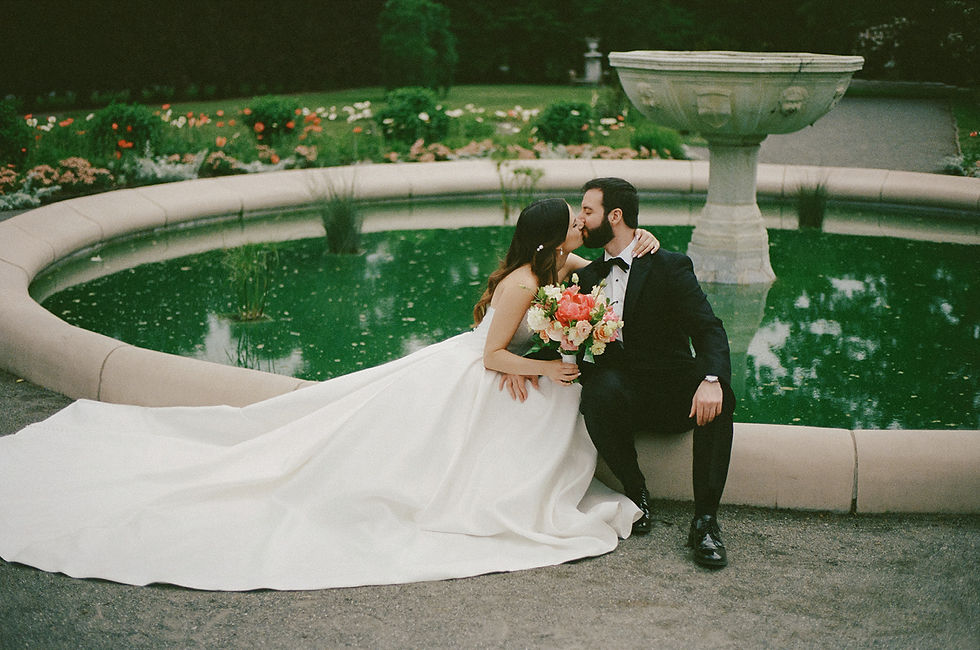
The Italianate Garden and the Chuppah
The Italianate Garden is one of Elm Bank's most recognizable spaces and a beautiful setting for a Jewish ceremony.
Its symmetry creates a natural focal point for the chuppah, while the fountain, formal garden beds and architecture provide a sense of occasion without requiring excessive decoration.
But weddings in the same garden do not need to produce versions of the same ceremony.
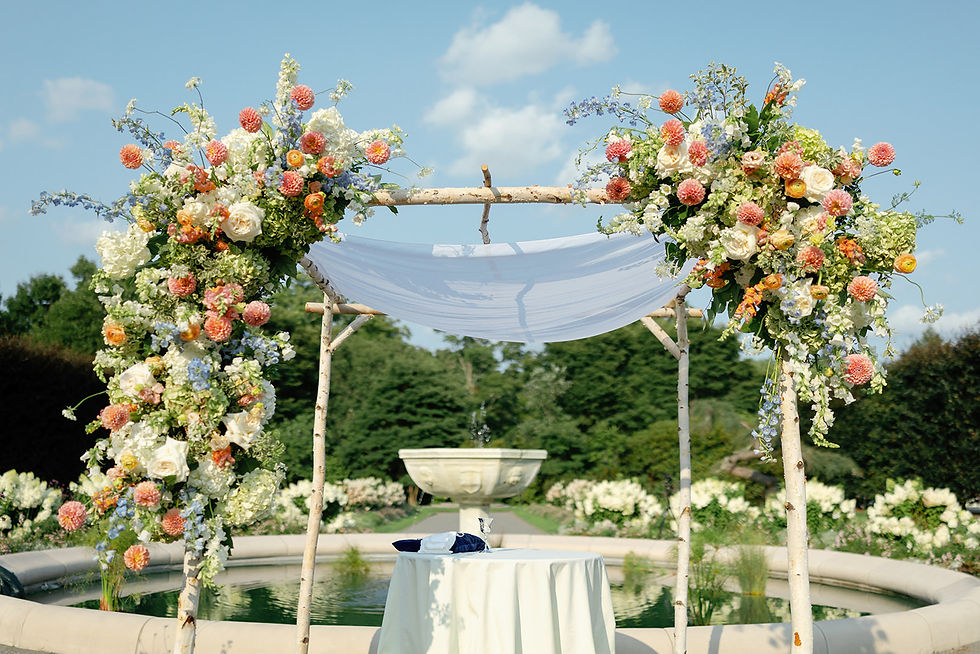
The chuppahs we have created at Elm Bank have reflected the couples themselves, their floral design, the season and the atmosphere they wanted for their wedding. Some were more abundant and romantic; others were restrained and architectural.
This is one of the things I appreciate about the space. The garden provides structure, but it does not dictate the design.

Before the Ceremony: Tish, Bedeken and Ketubah
Some of the most meaningful parts of a Jewish wedding happen before the formal ceremony begins.
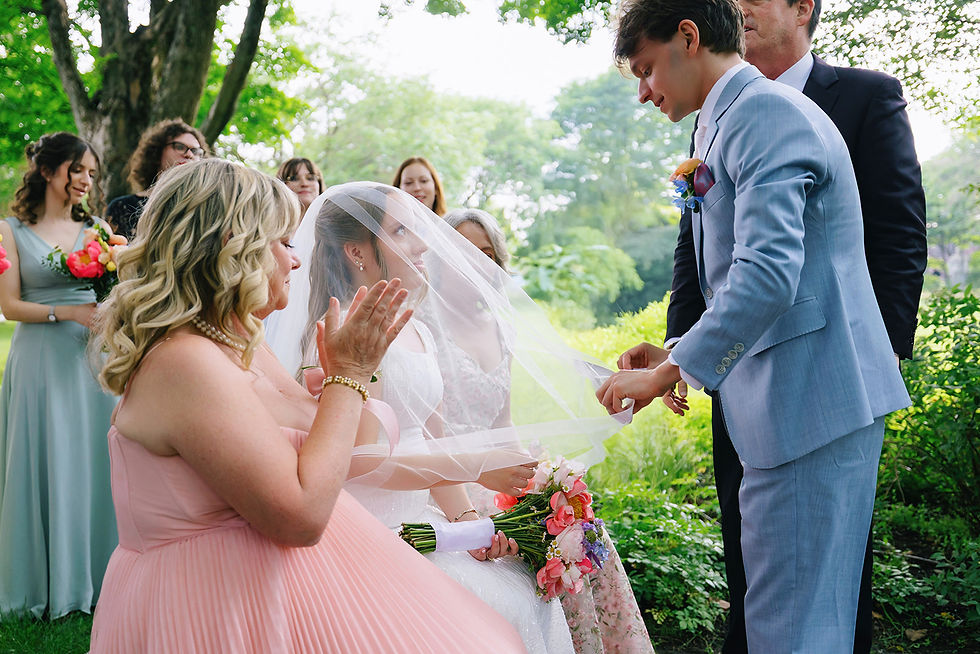
At Olivia and Jake's wedding, the tish and bedeken were important parts of the celebration. These traditions create an entirely different emotional rhythm before the walk down the aisle.
The tish brings energy, family and friends together around the groom. The bedeken is much more intimate. One of my favorite photographs from Olivia and Jake's wedding is not a grand decor photograph at all. It is the group of women gathered around Olivia during the bedeken.
That image says something important about Jewish weddings that beautifully styled ceremony photographs cannot always communicate: these celebrations are deeply rooted in family and community.

The ketubah signing provides another quieter moment before the ceremony. Depending on the couple and their traditions, it may be intimate and contemplative or surrounded by parents, family and close friends.


Thoughtful planning of these events matters. They need appropriate spaces, enough privacy, a realistic timeline and an understanding of who needs to be where. They cannot simply be squeezed into the schedule immediately before the ceremony.
The Ceremony: Tradition Within a Garden Setting
The chuppah may be the visual centerpiece, but the ceremony is about much more than its design.
Practical considerations include where family members will sit, how the processional will work, where the rabbi or cantor will stand, how the couple will enter and leave, and how guests will transition afterward.
At an outdoor venue, another essential consideration is the weather.
A beautiful garden ceremony should always have a carefully considered Plan B.
That decision needs to be made before the wedding day, not improvised when rain appears in the forecast.

Breaking the Glass
There are certain moments at a wedding that I can anticipate after years of planning them and still enjoy every single time.
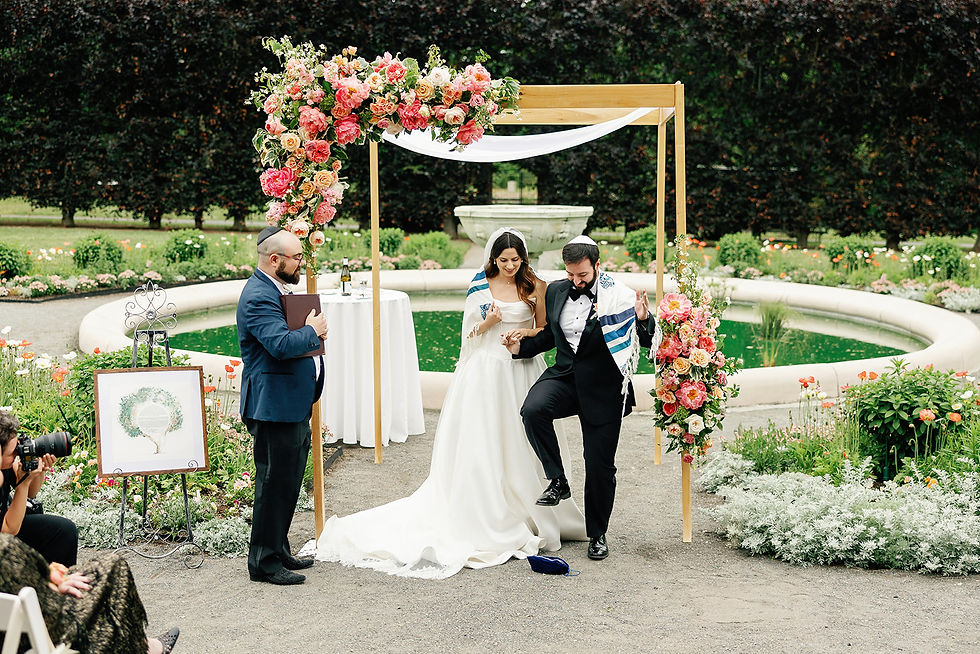
Breaking the glass is one of them.
There is a tiny moment of anticipation, followed by the sound of the glass and the immediate response of everyone around the couple. The atmosphere changes almost instantly.
Mazel tov!
It is also one of those traditions that produces wonderfully spontaneous photographs because nobody is posing anymore.


And Then Comes the Hora
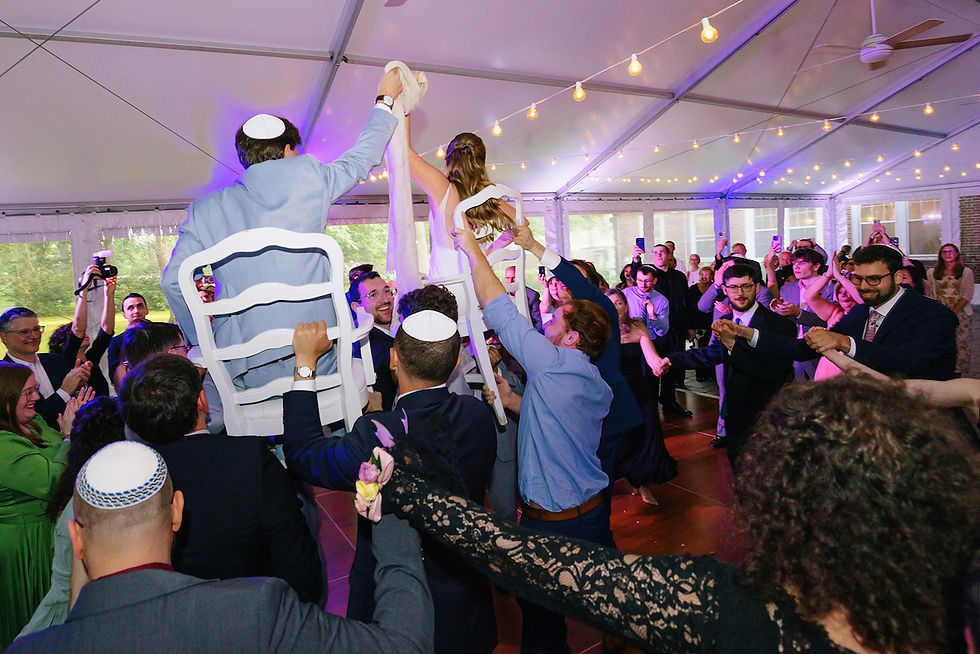
If the chuppah represents the ceremonial heart of a Jewish wedding, the hora may be its most uninhibited expression of joy.
It also requires more planning than guests generally realize.
The band or DJ needs to know exactly when it will begin. The couple needs appropriate chairs. There needs to be enough room around them, and the planner and entertainment team need to anticipate the transition so that guests join naturally.
When it works, it is fantastic.
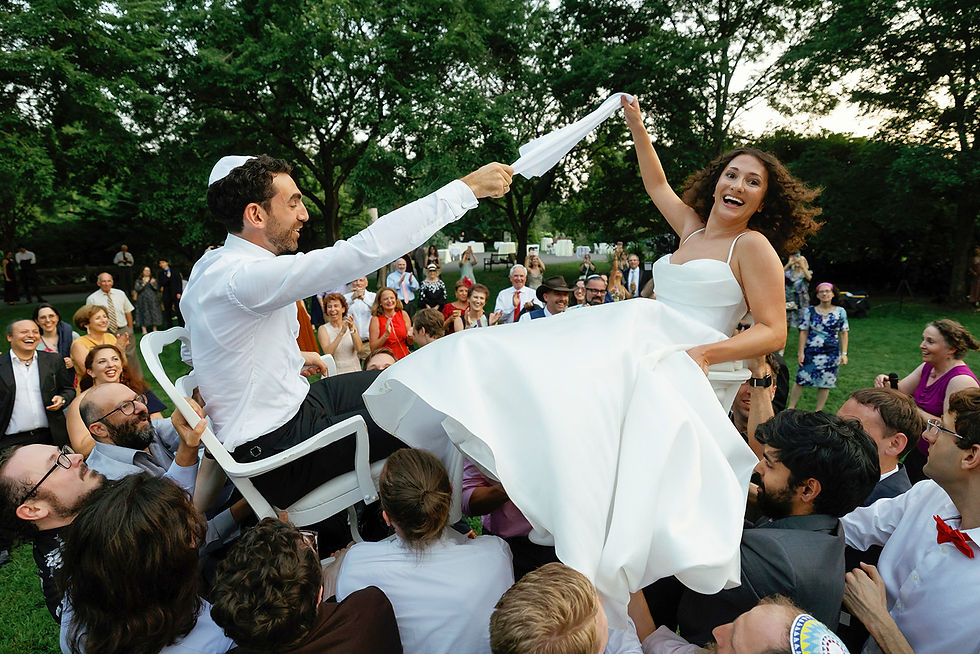

At Elm Bank, the hora can look different at every wedding, but the essential ingredients remain the same: music, family, friends, movement and an extraordinary amount of energy.
A Chinese-Jewish Wedding at Elm Bank
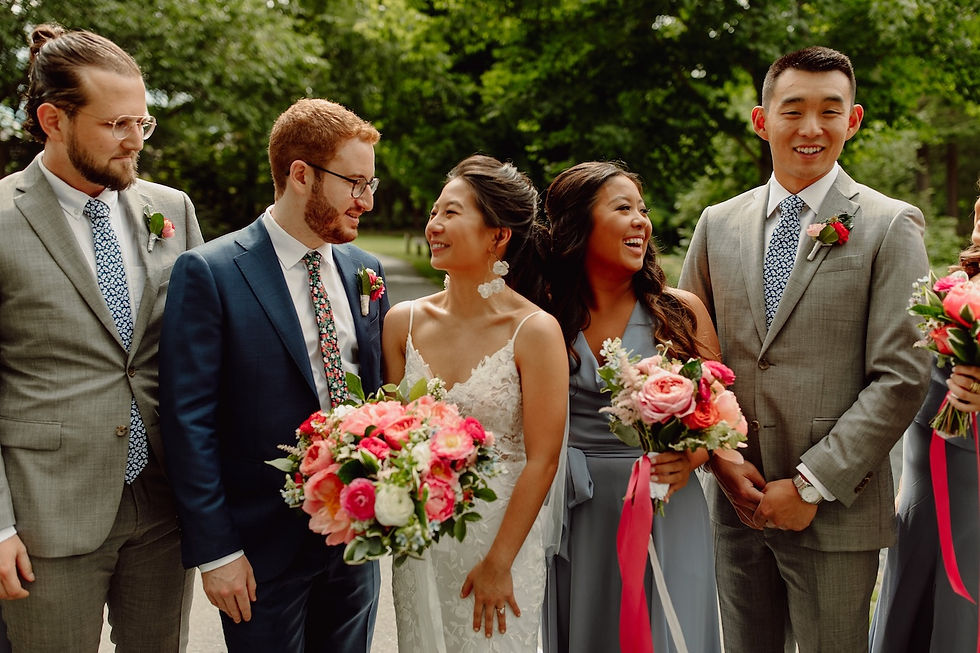
JingJing and Andrew's celebration is also a wonderful example of something I care deeply about in my work: allowing different cultures and family traditions to coexist naturally within one wedding.
Their Chinese-Jewish wedding did not need to fit into a single cultural category. The celebration could honor both backgrounds while still feeling cohesive and personal.
For multicultural couples, this is particularly important. Traditions should never feel as though they have been inserted into the wedding simply because they are expected. We look at what matters to the couple and their families, then consider how those elements fit within the larger celebration.
The Same Traditions, Very Different Weddings
Looking back at these celebrations together is particularly interesting because the venue is recognizable in every one of them, yet the weddings themselves are not interchangeable.
JingJing and Andrew brought together Chinese and Jewish traditions.
Olivia and Jake's wedding gave us beautiful opportunities to experience the tish, bedeken and other traditions surrounding the ceremony, along with some extraordinarily emotional family moments.
Nicole and Mark's wedding reminds me that the most important photographs are not necessarily the ones documenting a particular Jewish ritual. Their quiet private vows in the garden, portraits among the flowers and first dance are equally important parts of the story.

Anna and Jacob created yet another interpretation of a Jewish wedding at Elm Bank, with their own ceremony, chuppah, celebration and hora.

This is why I would never approach a venue by asking, 'What did we do here last time?'
The more useful question is, 'What makes sense for this couple?'
Beyond the Ceremony: The Gardens
One of Elm Bank's greatest advantages is that the experience does not end when the ceremony is over.
The gardens give couples and photographers many opportunities for portraits without leaving the property or disrupting the wedding timeline.
But portraits don't always have to mean formal, posed photographs.
Some of my favorite images are quieter ones: a couple alone in the garden, private vows, laughter between events, or a few minutes together before returning to their guests.


These photographs provide a counterpoint to the energy of the chuppah and hora and often become some of the most personal images of the day.
The Carriage House After Dark
The transition into the reception creates another personality entirely.
Once evening arrives and the Carriage House is illuminated, Elm Bank feels very different than it does during a sunny garden ceremony.
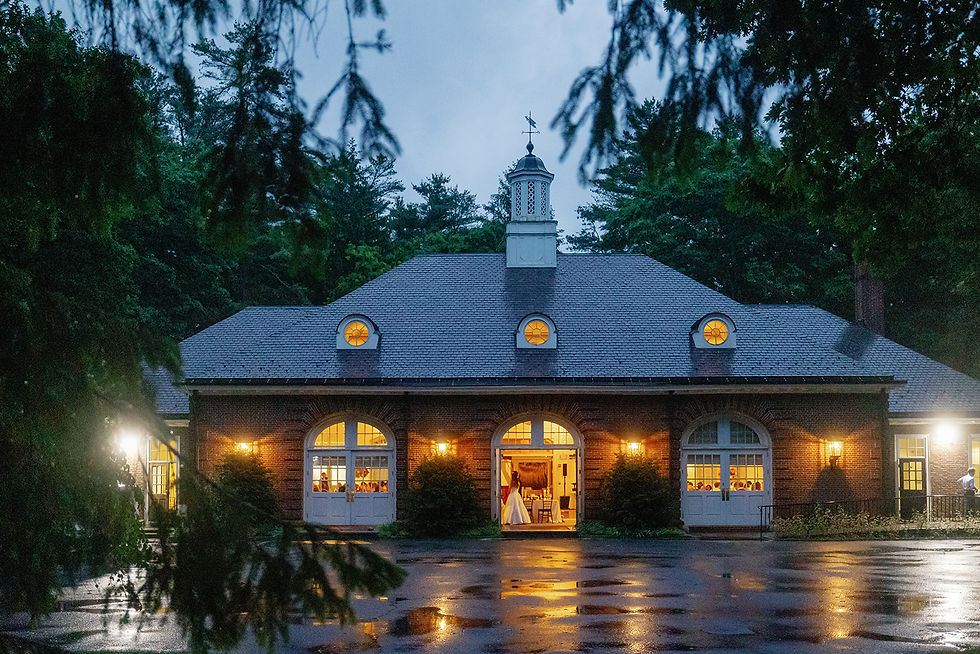
Inside, the architecture gives us enough character to create an elegant reception while still allowing florals, lighting, linens and tabletop design to establish the individual aesthetic of each wedding.
And then the room needs to work.
There must be space for dinner service, speeches, dancing and, for a Jewish wedding, a very enthusiastic hora.
Beautiful design and good logistics are not separate goals. The best weddings need both.


What Planning Weddings at Elm Bank Has Taught Me
Planning weddings at Elm Bank over the years has given me the kind of familiarity with a venue that goes beyond knowing its spaces.
You learn how guests move through the property, how much time transitions actually require, where private moments can happen before the ceremony, how different layouts affect the reception, and how the gardens and Carriage House change as daylight gives way to evening.
For a Jewish wedding, that familiarity is particularly useful because there are often several traditions and transitions to accommodate throughout the day.
But knowing a venue well should never mean repeating a previous wedding. For me, experience does exactly the opposite. It gives us the freedom to concentrate on the couple, their families, their traditions and the atmosphere they want to create.
Every wedding I have planned at Elm Bank has been different. That is exactly how it should be.

Planning a Jewish Wedding at Elm Bank?
Located in Wellesley, Massachusetts, the Gardens at Elm Bank offers a beautiful setting for weddings in the Boston area, with formal gardens, distinctive ceremony spaces and the Carriage House for an elegant evening reception.
If you are considering The Gardens at Elm Bank for a Jewish, multicultural or interfaith wedding, I would be delighted to help you explore what your own celebration could look like there.
At Primavera Dreams Weddings, we plan celebrations with careful attention to Jewish traditions, family dynamics, design, logistics and the guest experience, while making sure the wedding remains distinctly yours.
Photography Credits
JingJing & Andrew: Mark Spooner Photography
Olivia & Jake, Nicole & Mark and Anna & Jacob: Alex Gordias Photography


